

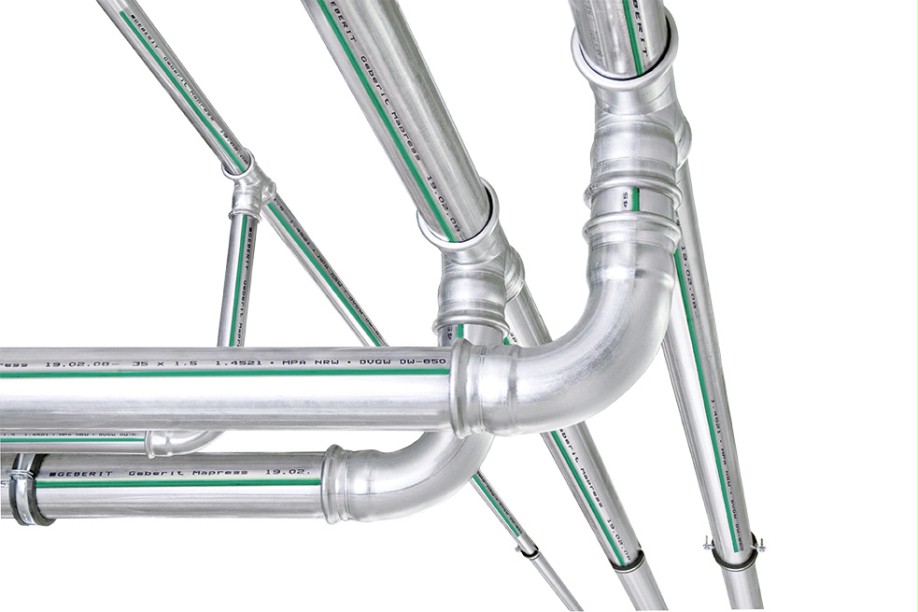
In many industries, compressed air is an indispensable part of daily operations. From car manufacturing to food processing, compressed air systems are essential for efficiency and productivity. However, planning and implementing such a system can be challenging. A correctly sized compressed air line ensures not only operational efficiency but also the longevity of the entire system. In this blog post, we discuss the most important parameters that must be considered when sizing compressed air piping in order to achieve optimum results.
The key parameters in a compressed air network
When sizing a compressed air line, several important parameters play a role in ensuring efficient and safe operation. Here are the most important factors to consider:
- Pressure level: the operating pressure of the system is crucial, as it determines the strength and type of pipes and fittings used.
- Flow rate: the required volume of air, measured in cubic metres per minute or litres per second, affects the diameter of the pipe. A correctly sized line minimises pressure losses and ensures efficient use of energy.
- Pipe length: the length of the pipe affects the pressure drop. Longer pipes lead to higher pressure losses, which must be taken into account when sizing.
- Pressure loss: excessive pressure losses can impair the efficiency of the system. The aim is to keep these losses as low as possible by sizing the pipe diameters appropriately and minimising bends and branches.
- Connections and fittings: every type of fitting (e.g. tees, elbows, reducers) causes additional pressure losses. The number and type of fittings must be included in the calculations.
- Pipe material: the choice of material (e.g. aluminium, steel, plastic) affects not only durability and corrosion resistance but also conductivity and the resulting pressure drop.
- Ambient conditions: ambient temperature and humidity can affect the performance and service life of the compressed air line. In particularly humid or corrosive environments, special materials or coatings may be required.
- Operational safety: safety standards and legal requirements must be met to avoid hazards from compressed air systems.
- Future expansion: sizing should also take future growth or additional demand into account to avoid costly modifications later on.
- Energy efficiency: careful planning can help to reduce energy costs, e.g. by choosing the right diameter to avoid unnecessary energy losses.
Calculating these parameters precisely usually requires specialist software or consulting experts, to ensure that the compressed air piping system works optimally and meets both technical and economic requirements.
Conclusion
Especially in larger compressed air networks with many consumers or long compressed air lines, a great deal of expertise is needed to plan a new network or the extension of an existing one correctly. As experienced specialists in compressed air technology, we understand the complexity and importance of correctly sized compressed air piping. We offer our customers not only in-depth advice but also careful planning and professional installation of compressed air systems tailored to their individual needs. With our expertise, we make sure that every system achieves maximum efficiency, safety and longevity. With our comprehensive services, we help you to develop future-proof systems that meet not only today’s requirements but also those of tomorrow.
Contact us for a free consultation.
Our compressed air piping systems
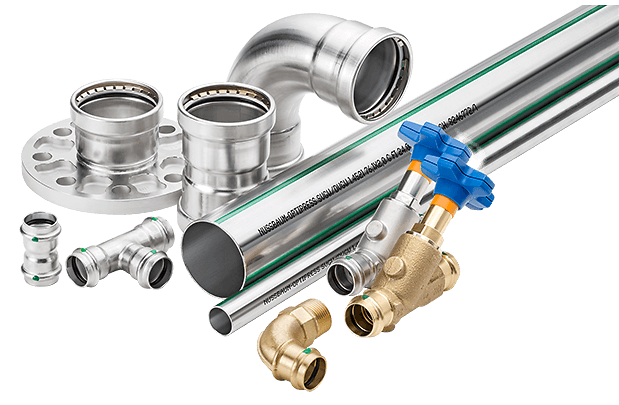
OPTIPRESS AQUAPLUS
Optipress-AquaPlus from Nussbaum sets new standards in sanitary engineering. Developed for the highest demands on quality and longevity, this innovative product line offers a safe and efficient solution for your compressed air and water installations.
Transair® piping systems
The Transair pipe is lightweight, robust and corrosion-resistant. Transair is made of 6063 T5 aluminium as specified in the ASTM B241 standard. It is extruded and calibrated within the tolerances specifically required for push-in connections. Transair is ideal for aggressive environments.