

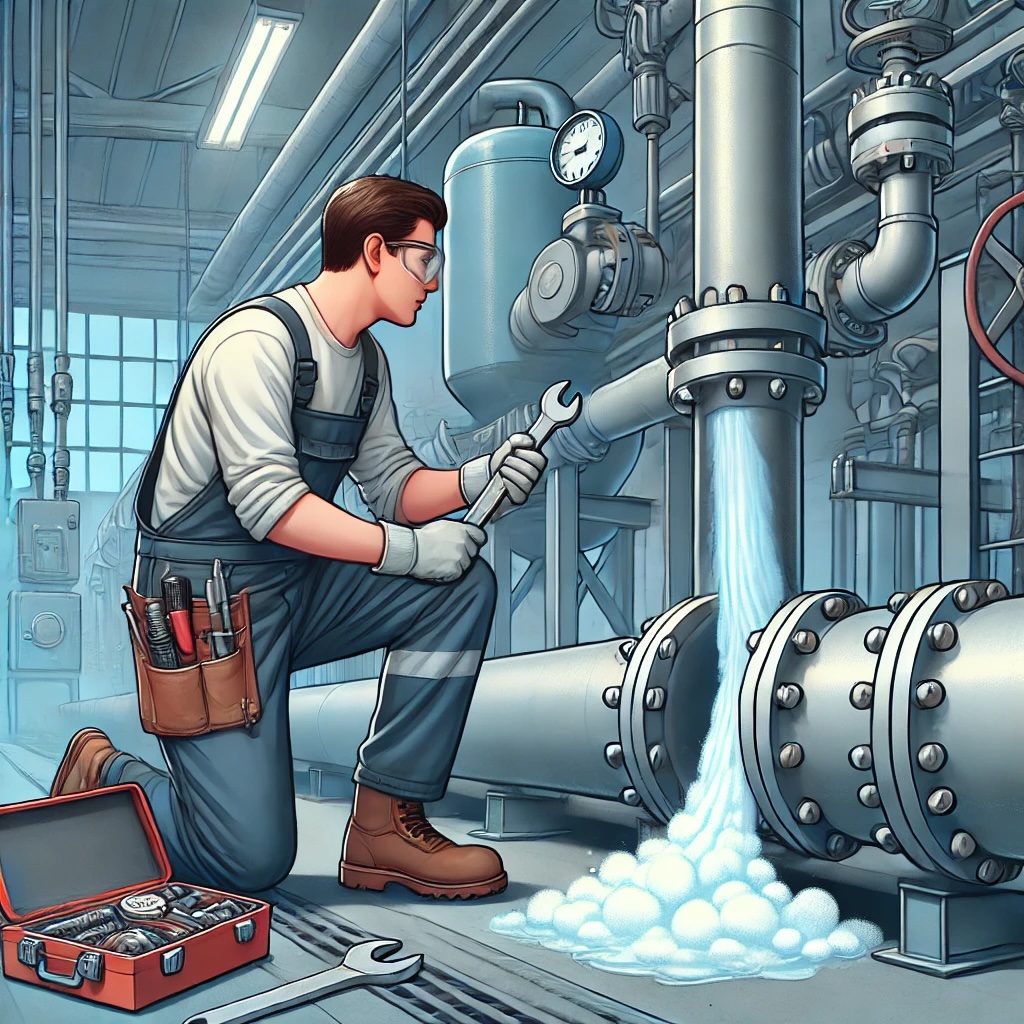
Compressed air systems are indispensable in many industries. However, inefficient systems can cause considerable costs. Leaks in particular are a common and costly problem. In poorly maintained networks, especially in older installations, leakage rates of 30 to 50% can occur. With a system pressure of 7 to 15 bar and compressors and dryers running continuously, even outside production hours, leaks lead to enormous energy losses and costs.
To reduce leaks in the compressed air system effectively and keep them low in the long term, a systematic process is essential. The aim is to achieve a permanent leakage rate of between 5 and 10%, as one-off repairs do not lower the leakage rate permanently. New leaks can form continuously.
Measuring the leakage rate
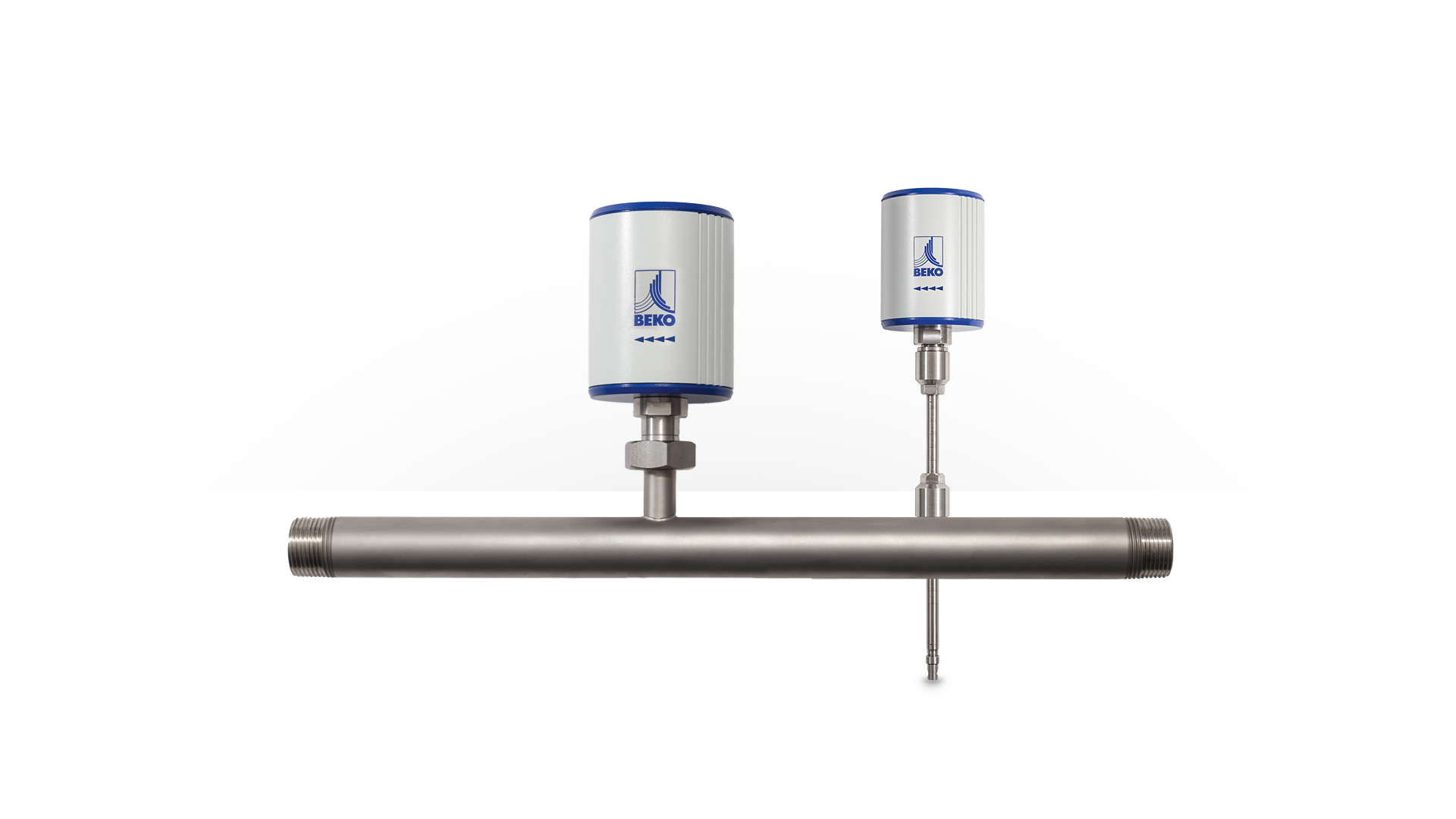
For efficient monitoring, we recommend installing a flow sensor in the main line directly downstream of the air receiver. Continuous measurement over a full week (Monday to Sunday) is recommended to obtain reliable data. During production breaks in particular, the flow profile reveals the actual leakage rate. If the flow rate exceeds the defined limit, a leak search should be started immediately.
In addition, flow measurement makes it possible to check and confirm the effectiveness of repairs, as a reduced flow rate at standstill can be expected once leaks have been successfully fixed.
The true costs of leaks
In recent years, electricity prices in Switzerland have undergone a remarkable development. The rise in 2023 was particularly striking, when average electricity costs for households increased by around 27% compared with the previous year. This increase was largely caused by higher demand for electricity and higher energy procurement costs in Europe, particularly due to uncertainties in energy supply and political tensions.
Combining the higher energy price with leakage losses reveals the true savings potential. Even though a compressed air network is never 100% tight, a reduction of just a few per cent can have an enormous impact on costs in larger networks. But it is also worth taking a close look (or listening closely) in small networks and replacing or repairing leaking fittings, hoses or pipes.
Based on current figures, this table shows the annual costs that even small leaks can cause. The effective compressed air loss also depends on the system pressure and increases with it.
| Hole diameter (mm) | Air loss at 6 bar (l/s) | Air loss at 12 bar (l/s) | Energy loss at 6 bar (kWh) | Energy loss at 12 bar (kWh) | Costs at 6 bar (CHF) | Costs at 12 bar (CHF) |
|---|---|---|---|---|---|---|
| 0,5 | 0,3 | 0,5 | 0,15 | 0,5 | 396 | 1’320 |
| 1 | 1,2 | 1,8 | 0,3 | 1 | 792 | 2’640 |
| 2 | 11,1 | 20,8 | 3,1 | 12,7 | 8’184 | 33’528 |
| 3 | 17,7 | 33,4 | 4,8 | 19,7 | 12’672 | 52’008 |
| 5 | 30,9 | 58,5 | 8,3 | 33,7 | 21’912 | 88’968 |
| 10 | 123,8 | 235,2 | 33 | 132 | 87’120 | 348’480 |
In May 2024, the average electricity price for consumer type III in Switzerland was 32.66 centimes per kilowatt hour. Source: Statista | Compressed air costs: kW x CHF 0.33 x 8,000 operating hours per year
Over a year, the cost of compressed air that is generated but not used can quickly rise to several thousand or even tens of thousands of francs, depending on the size of the system and the number and size of the leaks. The compressors have to make up for the leaks and run for considerably more operating hours, which leads to more service and maintenance work and makes the machines wear out faster. Leaks therefore have a negative effect not only on the energy balance but on all components of compressed air generation and treatment.
Leak detection: the first step towards savings
Tracking down compressed air leaks is particularly challenging because, unlike with water pipes, there are no visible traces such as escaping liquid. In addition, small leaks often go unheard in industrial or noisy environments.
Leak detection process: 5 steps to success
1. Leak detection:
The first step is to identify potential leak points in the compressed air system. Ultrasonic technology offers an effective method of detecting these leaks. Ultrasonic leak detectors make use of the fact that escaping air produces high frequencies that the human ear cannot perceive. These devices pick up these specific frequencies and thus help to locate even the smallest leaks precisely.
2. Leak quantification:
Once a leak has been identified, the amount of air lost through it is measured. This is typically stated in cubic metres per minute or litres per second and is crucial for assessing the urgency of the repair and the potential energy savings it offers.
3. Leak documentation:
Every leak identified and quantified is carefully documented. The documentation includes the exact position of the leak, its size and type, and any other relevant information that will be useful for subsequent repairs.
4. Leak reporting:
A detailed report is compiled from the data collected. This report contains an overview of all leaks, their potential impact on the energy efficiency of the system and recommendations for prioritising the repair measures. It serves as the basis for further decisions.
5. Leak repair:
In the final step, the documented leaks are repaired according to their priority. This may involve replacing or repairing defective parts, tightening connections or replacing worn seals. The aim is to minimise the leakage rate and maximise the operating efficiency of the compressed air system.
Conclusion: keeping at it pays off!
Finding and fixing leaks is not a one-off task! For small compressed air networks, we recommend an annual check. In medium-sized and large networks, continuous leak monitoring and repeated leak surveys whenever the defined leakage rate is exceeded are worthwhile.
With ongoing leak management, you reduce energy costs and cut the running times of the compressors and the downstream compressed air treatment, which also has a positive effect on maintenance costs.
What we offer you
We offer our customers comprehensive services for detecting and repairing leaks.
Professional leak detection
One of our qualified and thoroughly trained employees carries out professional leak detection on site, documents the results and repairs the leaks quickly and efficiently.
Rent a leak detector
For customers who prefer to track down leaks themselves, we offer the option of renting our state-of-the-art ultrasonic devices at an attractive price. To do so, see the list of rental units.
Buy a leak detector
Of course, we also sell ultrasonic leak detectors such as the METPOINT CID and offer comprehensive training for your staff to make sure you can use the devices effectively.
Choose the option that best suits your needs and benefit from our expertise to maintain your compressed air systems optimally and reduce costs.