

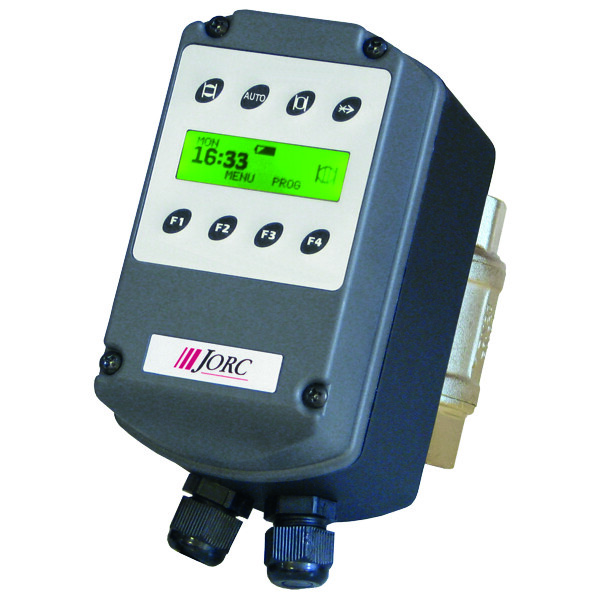
The headline doesn’t quite fit the product, as we have had the Air Saver® in our range for over a decade. Until now, the Air Saver® has led a rather overlooked existence – unfairly, in our view. So what is the Air Saver® and how can it significantly reduce a company’s energy costs?
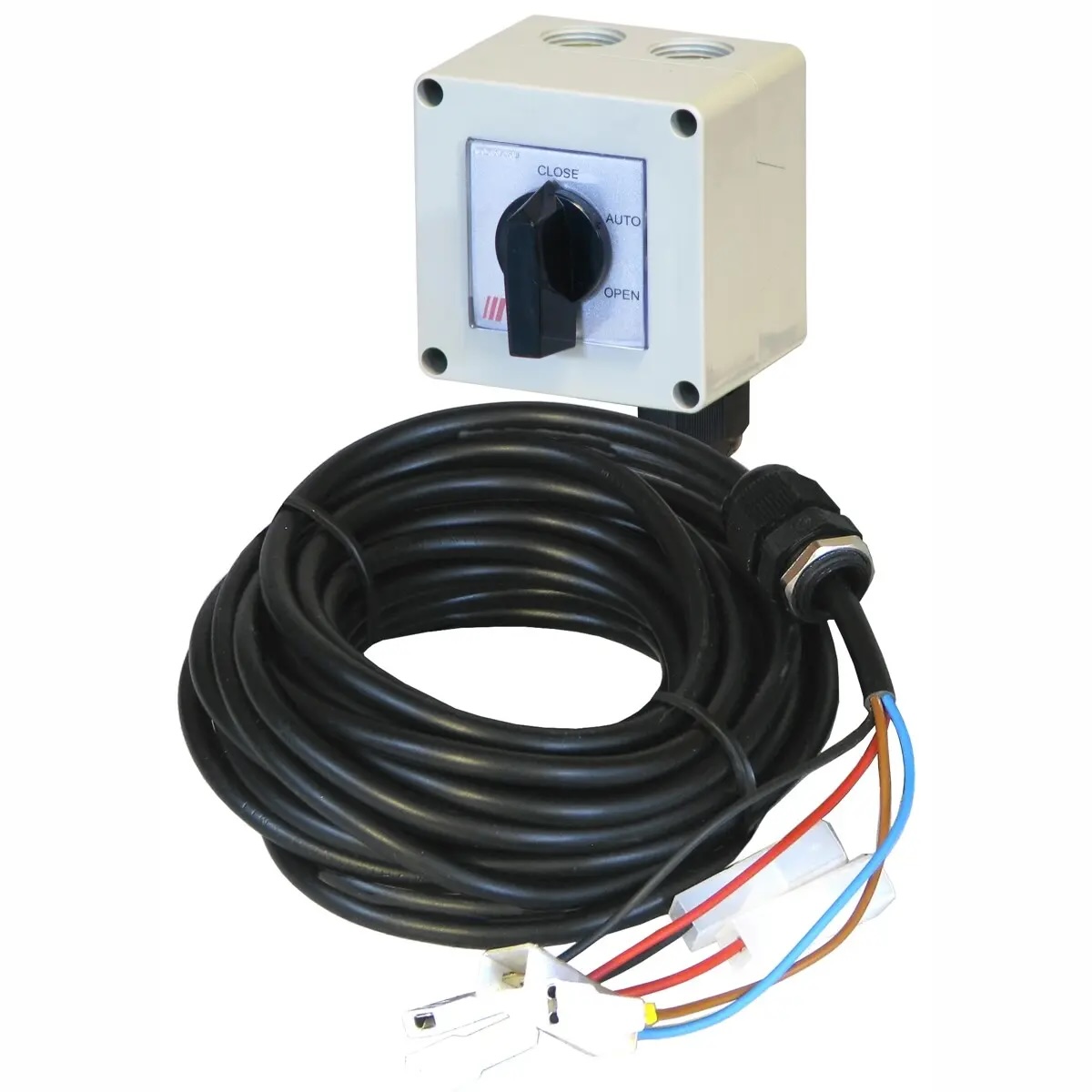
The Air Saver® consists of a weekly timer and a motorised ball valve. It is installed directly downstream of the air receiver in the compressed air line leading to the consumers. The weekly timer can then easily be set to reflect the production schedule. Up to 100 switching operations can be programmed. If that is still not flexible enough, an optional switch lets you bypass the timer and operate the valve manually.
And how does the Air Saver® work?
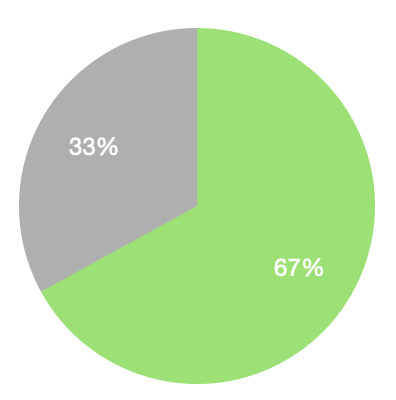
In a poorly maintained compressed air network, between 30% and 50% of the compressed air generated is lost through leaks (Blog: The true cost of compressed air leaks). Even in a well-maintained and regularly inspected network, leakage losses still amount to 5 to 10%. The Air Saver® helps to reduce these leakage rates further. The timer is programmed so that the compressed air valve is only open when production actually needs compressed air. Outside production hours, the Air Saver® closes its valve and isolates the compressed air network and the consumers from compressed air generation. Through the leaks, the network gradually empties and becomes depressurised, while the receiver continues to hold the pressure. Leakage at the compressor, dryer and filters is so low that only a minimum of energy is needed to compensate for it.
In most companies, leakage losses can thus be reduced by up to 60–70%, which brings large cost savings even where leakage rates are low. The Air Saver® therefore pays for itself within a few months.
| Hole diameter (mm) | Air loss at 6 bar without Air Saver (l/s) | Air loss at 6 bar with Air Saver (l/s) | Costs at 6 bar without Air Saver (CHF) | Costs at 6 bar with Air Saver (CHF) |
|---|---|---|---|---|
| 0,5 | 0,3 | 0,09 | 396 | 131 |
| 1 | 1,2 | 0,4 | 792 | 261 |
| 2 | 11,1 | 3,6 | 8’184 | 2’700 |
| 3 | 17,7 | 5,8 | 12’672 | 4’182 |
Gradual pressure build-up prevents damage
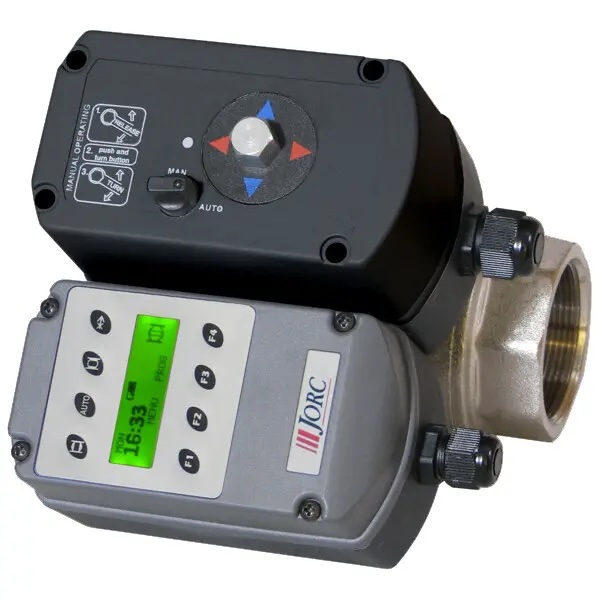
Shortly before production starts, the Air Saver® slowly opens its valve. With the 1-inch valve, going from “closed to open” takes around 30 seconds; with the 2-inch valve, around 105 seconds. This is important because it allows the compressed air network to fill slowly, avoiding pressure surges that could damage pipes and equipment.
By reducing leakage air, the Air Saver® saves energy costs while you sleep, and thanks to its flexible programming, the schedule can easily be adapted to changing production requirements. The purchase and installation costs pay for themselves in a short time, especially in networks with relatively high leakage rates and older piping.
Advantages of the Air Saver® over switching off compressors
Switching off compressors (on/off) shuts down not only the compressed air network but also the air receiver. When production starts, it then takes several minutes for the network to get back up to system pressure. In this scenario, the refrigeration dryers also have to be switched off, as they could otherwise freeze without any flow. When the network is started up again, however, the refrigeration dryers are not at operating temperature, and the first m3 of compressed air go supersaturated into the air receiver and the network. These are not ideal conditions for a production facility with sensitive equipment and installations.
With the Air Saver®, on the other hand, the compressors and refrigeration dryers remain on standby and at operating temperature. When the Air Saver® opens and fills the network, the refrigeration dryer is not overloaded and dries the air reliably. The compressed air network reaches operating pressure after just 30 seconds.
Air Saver® 2 inch
Optional switch
What are you waiting for?
Why wait when you can start saving a lot of money with the Air Saver® today? The Air Saver® has no drawbacks, is easy to operate and can be installed and programmed without any complicated rocket science 🚀. It works fully automatically and, once set up, needs no care, love or water. And with the optional switch, you can intervene manually at any time. WIN-WIN-WIN.